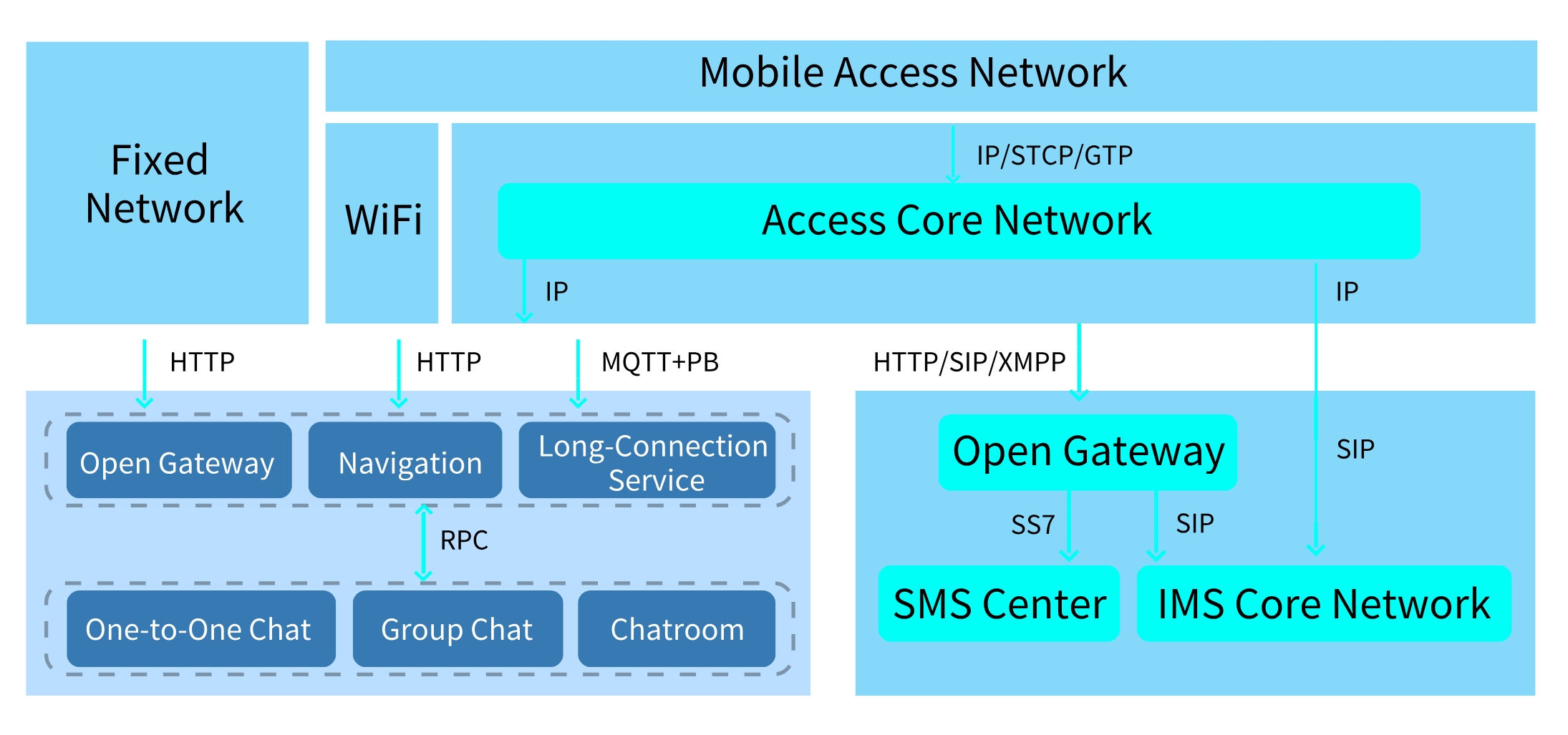
MQTT A lightweight binary publish-subscribe protocol widely used in IoT. Its minimal header significantly reduces traffic, though its application-level business logic is less extensive.
Transport-layer protocols have evolved quickly to meet new technical demands.
UDP prioritizes speed
TCP focuses on reliability
SCTP improves throughput
QUIC offers low-latency, multi-path data transmission
In contrast, application-layer protocols evolve more slowly, with HTTP, MQTT, SIP, and XMPP still dominant in their respective fields.
Conclusion: The RC IM Long-Connection Advantage
The RC long-connection protocol is built around two core goals: high efficiency and ease of use.
Efficiency
Efficiency is achieved through several integrated capabilities:
Reliability • Bidirectional heartbeats • A global network of low-latency access nodes • Intelligent reconnection logic • QoS guarantees for message delivery These ensure stable connections in all network environments.
Completeness Supports one-to-one, group, and chatroom messaging, as well as full-link message tracing for rapid troubleshooting.
Low Overhead & Extensibility The protocol maintains low transmission overhead while allowing custom message types and flexible business logic—drawing on the strengths of standard protocols without their limitations.
Ease of Use
The RC protocol is designed to be simple, unified, multi-platform, and highly extensible, making it easy for developers to build real-time messaging experiences quickly and reliably.
Contact Us
We'd love to discuss how RC's real-time communication solutions can support your business. Request a demo, explore pricing, or get tailored onboarding guidance.